

ข่าวอุตสาหกรรม
High Temperature Drying Oven: Complete Guide
วันที่:Mar 23, 2026
What Defines a High Temperature Drying Oven
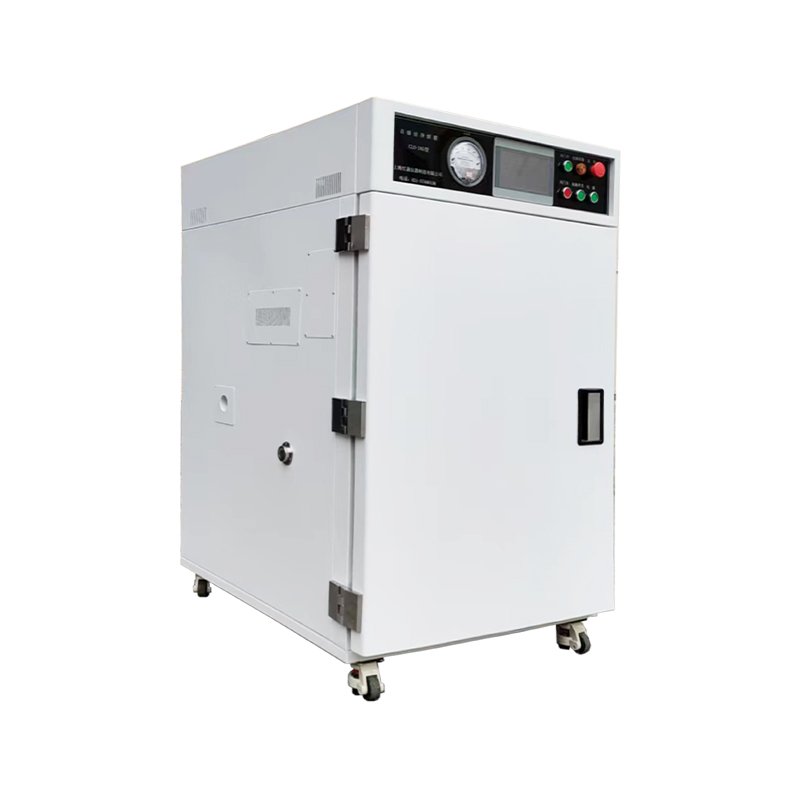
A high temperature drying oven is a precision thermal processing instrument engineered to deliver controlled, uniform heat across a wide operating temperature range — typically from 250°C to 600°C — for applications that standard laboratory or industrial ovens cannot support. While conventional drying ovens operate adequately for moisture removal and basic curing at lower temperatures, high temperature models are purpose-built to handle the demanding thermal requirements of advanced materials processing, high-end manufacturing, and cutting-edge scientific research.
The distinction between a high temperature drying oven and a general-purpose oven lies not just in maximum temperature capability, but in the combination of thermal stability, temperature uniformity, atmosphere control, and process repeatability that the equipment must deliver at elevated temperatures. At 400°C or above, maintaining a uniform temperature field within ±2°C across the entire chamber volume requires a fundamentally different approach to heating element design, airflow engineering, and insulation construction than lower-temperature equipment demands. These engineering requirements make high temperature drying ovens a specialized category of thermal processing equipment with a distinct set of design principles and performance specifications.
Heating System Design: Precision Electric Tubes and Forced Circulation
The heating system is the technical core of any high temperature drying oven, and the design choices made at this level determine the temperature stability, uniformity, and energy efficiency of the entire instrument. High-performance models utilize precision electric heating tubes — resistance heating elements manufactured to tight dimensional and electrical tolerances — to generate a highly stable and uniform heat source that can be precisely regulated by the oven's temperature control system.
Precision electric heating tubes offer several critical advantages over alternative heating approaches at high temperatures. Their distributed arrangement around the chamber walls ensures that radiant heat input is spatially balanced, preventing localized hot spots that would compromise temperature uniformity across the working volume. Their rapid thermal response — the ability to increase or decrease power output quickly in response to controller signals — enables tight temperature regulation even during thermal disturbances such as door openings or the introduction of cold sample loads.
Heat generated by the electric heating tubes is distributed through the chamber by a high-efficiency centrifugal fan, which drives a controlled and continuous turbulent airflow within the chamber. This forced convection mechanism is the primary means by which temperature uniformity is achieved in a high temperature drying oven. The centrifugal fan's ability to maintain consistent airflow velocity and pattern at high temperatures — where air density decreases and thermal gradients are more pronounced — is a key engineering challenge that separates high-quality instruments from lower-specification alternatives. Well-designed forced-circulation systems achieve temperature uniformity of ±3°C or better across the usable chamber volume, enabling precise and repeatable control over material heating, dehydration, curing, and heat treatment processes.
Temperature Range and Process Flexibility: 250°C to 600°C
The wide operating temperature range of a high-performance high temperature drying oven — from 250°C to 600°C — is what gives it the process flexibility to serve as a single platform across a diverse range of industrial and scientific research applications. This range spans multiple distinct thermal processing regimes, each associated with different material transformation mechanisms and application requirements.
| Temperature Range | Process Type | Typical Applications |
| 250°C – 350°C | Advanced drying, baking, curing | Electronic component baking, polymer curing, pharmaceutical drying |
| 350°C – 450°C | Thermal decomposition, calcination | Catalyst preparation, ceramic pre-sintering, binder burnout |
| 450°C – 550°C | Annealing, stress relief | Metal powder processing, glass treatment, new materials synthesis |
| 550°C – 600°C | High-temperature annealing, sintering prep | Advanced alloy processing, specialty ceramic research, precision electronic paste firing |
This temperature flexibility means that a single high temperature drying oven can support the full thermal processing sequence for complex multi-stage manufacturing processes, eliminating the need for multiple single-purpose pieces of equipment and simplifying laboratory or production floor layouts. For research institutions working across multiple material systems, this versatility represents a significant practical and economic advantage.
Nitrogen Purging System: Processing Oxidation-Sensitive Materials
For materials that are extremely sensitive to oxidation, a standard air-atmosphere high temperature drying oven — regardless of how precise its temperature control — is fundamentally unsuitable. At temperatures above 300°C, oxygen reacts rapidly with a wide range of materials, causing oxidation, hydrolysis, denaturation, or degradation that compromises the quality, functionality, and consistency of the processed material. Addressing this challenge requires not just temperature control, but atmosphere control.
The high temperature drying oven can be integrated with a professional nitrogen purging system that continuously injects high-purity nitrogen to effectively replace and remove reactive gases — primarily oxygen and moisture — within the chamber. This system creates a low-oxygen, high-cleanliness, and highly uniform temperature inert atmosphere that suppresses the adverse chemical reactions that would otherwise occur during high-temperature processing. The result is a controlled processing environment that protects sensitive materials from atmospheric degradation while maintaining the full temperature uniformity and stability capabilities of the base oven system.
Materials That Require Inert Atmosphere Processing
- High-end metal powders — Titanium, aluminum, and rare earth metal powders oxidize rapidly at elevated temperatures, forming surface oxide layers that compromise sintering behavior, electrical conductivity, and mechanical properties. Nitrogen atmosphere processing prevents oxide formation and preserves the powder's functional characteristics through the full thermal cycle.
- Specialty polymers — High-performance engineering polymers including PEEK, polyimide, and fluoropolymers undergo chain scission and property degradation when heated in air above their oxidative stability threshold. Nitrogen purging extends the processable temperature range and preserves molecular weight distribution, mechanical performance, and optical properties.
- Precision electronic pastes — Silver, gold, and copper-based conductive pastes used in advanced electronics manufacturing require precise thermal profiles in controlled atmospheres to achieve target resistivity, adhesion, and microstructure. Oxygen contamination during firing produces resistivity shifts and adhesion failures that inert atmosphere processing eliminates.
- Humidity-sensitive biological samples — Biological agents, lyophilized pharmaceutical intermediates, and enzyme preparations processed at elevated temperatures in a nitrogen atmosphere are protected from both oxidative degradation and moisture-driven hydrolysis, preserving bioactivity and formulation integrity.
The nitrogen purging system's design must ensure that purge gas is introduced and exhausted in a manner that maintains the chamber's temperature uniformity — a poorly designed purge system that introduces cold nitrogen directly into the working volume can create thermal gradients that negate the oven's precision heating capabilities. Well-engineered systems preheat the purge gas before introduction and distribute it through diffusers that integrate with the forced convection airflow pattern, preserving both atmosphere quality and temperature uniformity simultaneously.
Application Fields Across Industry and Scientific Research
The combination of wide temperature range, precise uniformity, and optional inert atmosphere capability positions the high temperature drying oven as an indispensable core technology platform across a remarkably broad spectrum of industries and research disciplines. Its applications have penetrated numerous fields where thermal processing quality directly determines product performance and process reliability.
New Materials Synthesis and Testing
The synthesis and testing of new materials — including advanced ceramics, composite materials, functional coatings, and nanomaterials — require thermal processing environments that can be precisely controlled and reproducibly replicated across experimental runs. High temperature drying ovens provide the stable, uniform thermal field necessary to isolate material response to temperature as an independent variable, enabling reliable structure-property relationship studies that form the basis of materials innovation.
Pharmaceutical Research and Biological Agent Preparation
In pharmaceutical research and development and the preparation of biological agents, high temperature drying ovens support sterilization validation, active pharmaceutical ingredient (API) thermal stability testing, excipient drying, and formulation development. The ability to maintain precise temperature profiles with documented uniformity is essential for regulatory compliance in GMP environments, where process reproducibility must be demonstrated and documented for regulatory submission.
Precision Chemical Synthesis
Precision chemical synthesis processes — including sol-gel ceramic preparation, catalyst calcination, and thermally activated reaction intermediates — depend on the high temperature drying oven to deliver the exact thermal conditions required for target phase formation or reaction completion. Temperature deviations of even ±10°C can shift crystal phase composition, specific surface area, or catalytic activity in ways that are directly measurable in final product performance.
Electronic Component Processing and Food Safety Analysis
Dust-free baking of electronic components — including ceramic capacitors, piezoelectric elements, and thick-film substrates — requires precise high-temperature processing in clean, particle-controlled environments. The high temperature drying oven's sealed chamber and controlled airflow system minimize particle contamination that would cause failures in sensitive electronic assemblies. In food science, the safety analysis of food components relies on high-temperature ashing, moisture determination, and thermal stability testing conducted in high temperature drying ovens calibrated to traceable temperature standards — ensuring that analytical results meet the accuracy requirements of regulatory and quality assurance programs.
Selecting the Right High Temperature Drying Oven for Your Process
Selecting a high temperature drying oven requires matching the instrument's specifications to the specific demands of the intended process. Generic purchasing decisions based on maximum temperature alone consistently result in equipment that underperforms against process requirements or overspecifies capabilities that the application does not need. The following parameters should be evaluated systematically during the selection process.
- Temperature uniformity specification — Verify the manufacturer's stated temperature uniformity value and the chamber volume over which it applies. Uniformity figures quoted for a small central zone are not representative of the full usable volume. Request calibration data or third-party test reports showing temperature mapping across the complete chamber at the process temperature.
- Temperature stability over time — Distinguish between uniformity (spatial variation) and stability (temporal variation). A high temperature drying oven used for long-duration heat treatment processes must maintain its set point within specification over hours, not just during initial heat-up. Request stability data at the target process temperature over a representative process duration.
- Atmosphere control compatibility — If nitrogen purging is required now or anticipated in the future, confirm that the oven body construction — door seals, chamber penetrations, and exhaust system — is compatible with inert gas operation. Retrofitting atmosphere control to an oven not designed for it rarely achieves the oxygen levels required for sensitive material processing.
- Chamber volume and loading capacity — Match chamber volume to the typical batch size, accounting for the airflow clearance required around samples to maintain uniformity. Overloading a chamber — stacking samples in ways that obstruct the forced convection airflow — is the most common cause of poor temperature uniformity in field use, regardless of the oven's intrinsic specification.
- Control system and data logging — For regulated industries and research applications where process documentation is required, verify that the oven's control system supports programmable temperature profiles, data logging with timestamped records, and export formats compatible with the facility's quality management system.
ส่งข้อความ

- ติดต่อ
-
- No. 119, Qingliang Avenue, Yaozhuang Town, Zhejiang, China.
- [email protected] ( Email )
- +86-13671719019 ( Phone )
- +86-021-57440136 ( Tel )
- สินค้า
- มือถือ

 กลับไปด้านบน
